Freight Pricing
Freight Accessorial Charges Explained: Common Fees and How to Control Them
A practical guide to detention, demurrage, layover, lumper, redelivery, and other freight fees, with clear steps for reviewing charges and preventing avoidable costs.
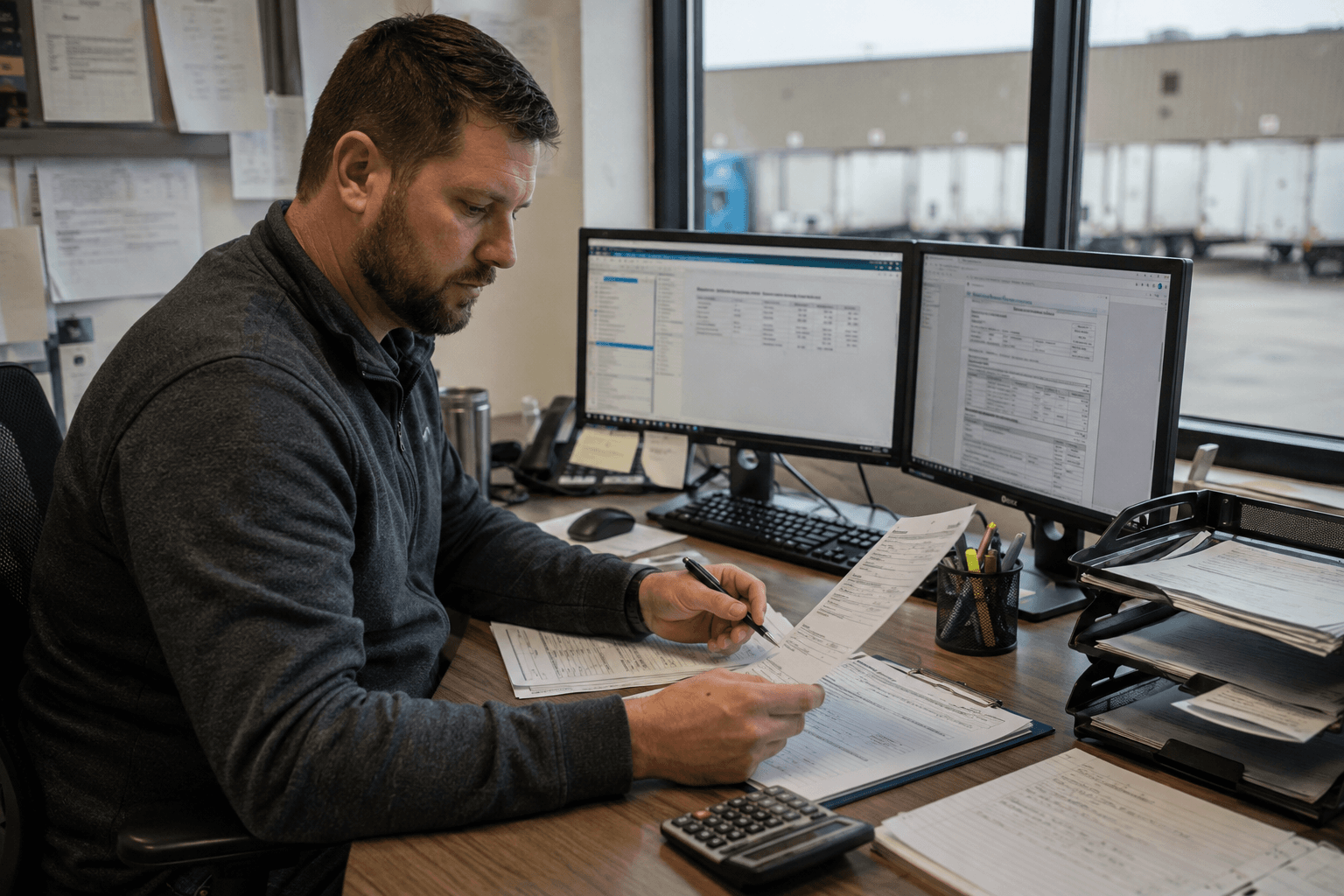
The linehaul rate looked right when the load was booked. A week later, the invoice includes detention, a lumper receipt, and redelivery. Operations remembers a receiver delay, but nobody is sure when the driver arrived, who approved the lumper, or why delivery was attempted twice. The charges may be valid, disputable, or preventable.
Accessorial charges pay for work, time, or equipment outside basic transportation. Long driver delays, cancellations after dispatch, and unquoted handling create costs. Problems begin when shipment requirements are incomplete, terms are vague, or the paperwork does not match the operation.
This work starts before invoice review. Pricing, procurement, and operations need to know what the rate includes, what triggers another fee, and what support the carrier must provide.

Handling, equipment, and failed attempts
A lumper charge covers third-party labor used to unload, sort, or restack freight, often at food-distribution facilities. The carrier may pay at the site and seek reimbursement. Keep the receipt, facility, service performed, amount, and approval. Responsibility for unloading should be settled before arrival.
Truck ordered not used, or TONU, applies when a carrier dispatches a truck but the shipment is cancelled or unavailable. Note acceptance, dispatch, cancellation, and arrival times. Cancelling before dispatch is not the same as cancelling after the truck is moving.
Redelivery covers another delivery attempt after a location is closed, freight is rejected, an appointment is wrong, paperwork is missing, or the receiver has no space. Check whether the first attempt followed the agreed appointment and instructions. A carrier arriving outside the delivery window does not automatically have a valid redelivery charge.
Inside delivery means moving freight beyond the normal dock, curb, or loading area. Liftgate service raises or lowers freight where no dock or forklift is available. Limited-access delivery applies at locations such as schools, construction sites, storage facilities, government buildings, and some residential-style properties. Definitions vary by carrier.
These requirements belong in the quote. Ask whether the location has a dock or forklift, who will receive the freight, and where the shipment must be placed. A company name and street address rarely answer those questions.

When waiting time becomes a disputed invoice
Consider a hypothetical dry-van shipment from Chicago to Indianapolis with a 10:00 a.m. receiver appointment. The rate confirmation allows two free hours and lists detention at $75 per hour after that. Tracking shows the driver entered the property at 9:48, while the receiving clerk logged check-in at 10:22. The trailer was empty at 1:05, and the driver left at 1:18. The carrier invoices two hours of detention for $150.
That invoice cannot be tested with one timestamp. The clock might begin at the appointment, gate arrival, or check-in, then stop at unloading completion or departure. The agreement may bill exact increments, round partial increments, or apply a minimum after free time. The same timeline can therefore produce different amounts. Ask the carrier for its calculation and compare it with the written agreement and shipment documents.
The operating cause matters too. A facility may hold the driver outside before check-in, or operations may provide the wrong appointment number. The charge can be valid even when its calculation needs correction. Fix the process before the same argument returns on the next load.
A delivery requirement missed during quoting
Consider a hypothetical shipment of palletized equipment moving from Dallas to a small medical office in Tulsa. The quote was built as a standard dock-to-dock delivery. On arrival, the driver finds no dock, no forklift, and a request to move the pallets through a side entrance. The carrier adds liftgate, limited-access, and inside-delivery charges totaling $310.
Those fees may be legitimate because the service performed differed from the quote. Review whether the liftgate was used, the location meets the carrier's definition of limited access, and the driver moved freight inside. Delivery notes, photographs, the bill of lading, and the agreed accessorial schedule should support the answer.
The preventable mistake happened earlier. The delivery profile omitted the site type, unloading equipment, and placement requirements. Adding those facts to future orders does more good than treating the invoice as an isolated surprise.
Keep enough detail to review the charge
Commercial terms and operating facts should be available together. Retain the rate confirmation or contract, accessorial schedule, appointment details, shipment instructions, equipment requirements, and responsibility for special services.
While the load is moving, retain acceptance, cancellation notices, arrival and departure events, appointment revisions, approvals, receipts, and signed shipping documents. Identify the source and time. "Receiver moved appointment to Friday at 8:00 a.m.; advised Thursday at 12:16 p.m." is more useful than "receiver delay."
There is no need to document every conversation. Someone who was not involved in the load should still be able to reconstruct the relevant events and apply the terms.
Dispute the calculation, not just the total
Begin with the agreement. Check the charge type, rate, free time, minimum, billing increment, rounding rule, and required backup. Then build a short timeline from information created during the shipment and compare it with the invoice.
A useful dispute is specific. If the invoice bills three hours but the signed receipt shows a 12:40 p.m. departure, provide the appointment and check-in times and free-time allowance. Ask which clock start, billing increment, and rounding rule produced three hours. The correct amount may differ. Written terms and verified timestamps decide it.
Attach the relevant documents and identify the amount under review. Approve supported fees, send genuine errors back consistently, and escalate ambiguous terms. Disputing every accessorial wastes time and damages productive carrier discussions.
A practical accessorial checklist
Before booking and again before approving an extra charge, check:
- Are free time, rates, minimums, billing increments, and rounding rules documented?
- Are pickup and delivery appointments clear, including time zones?
- Does either location require a liftgate, inside service, special labor, or limited-access handling?
- Are arrival, check-in, completion, and departure times available?
- Is there a receipt or written approval for third-party labor and other pass-through costs?
- Did a cancellation or failed delivery happen after the carrier committed equipment?
- Does the invoice follow the agreed definition and shipment timeline?
- Has the operating cause been noted so a preventable charge does not repeat?
Reduce the charges operations can control
Some accessorials are unavoidable. Weather closes terminals. Receivers reject damaged freight. Customers change urgent shipments after a truck is dispatched. The useful work is separating those exceptions from failures that can be prevented.
Keep facility profiles current and verify appointment numbers before dispatch. Give pricing and the carrier complete delivery requirements. Set an escalation point before free time expires. When a delay begins, notify whoever can still change the outcome. Look for repeated charges by location, lane, customer, and cause instead of treating each invoice as a standalone accounting problem.
BidSource can help teams keep rate terms and freight-pricing decisions in a clearer working process. When an extra charge arrives, reviewers should be able to understand the agreement, reconstruct the shipment, and decide what deserves payment.
The best accessorial review ends with a decision the team can explain. Pay supported charges, challenge errors with specific evidence, and carry the useful operating detail into the next quote or shipment.